
The most effective tire management solutions don’t start with technology; they start with a clear understanding of the problem. Yet mines continue to invest in technologies that don’t always deliver the outcomes expected of them. Kal Tire explores why defining the operational challenge first is key to determining which technologies, expertise and processes are needed – and just as importantly, which aren’t.
Mining companies have never had greater access to operational technology. Tire pressure monitoring systems (TPMS), thermal imaging, artificial intelligence (AI), fleet management platforms and advanced analytics are providing unprecedented visibility into the health and performance of mobile assets.
For operations looking to improve safety, reduce costs and increase productivity, that’s good news. But it also raises an important question: how do you know which technology is right for your operation? Too often, that question is answered before another, more important one has been asked: what problem are we trying to solve?
When a problem emerges, pressure mounts to implement a solution quickly. But acting before the issue is fully understood can direct resources towards factors that are only loosely connected, or not connected at all, to what is driving performance. A product may work as intended but be expected to do more than it was designed for, or it may address only one part of a broader challenge. In these situations, activity increases, but the outcome falls short. Not because the technology is poor, but because the challenge wasn’t fully understood.
“The most effective solutions don’t begin with a product; they begin with a clear understanding of the challenge. Every mining operation is different, so it’s important to understand the operating environment, identify the factors influencing asset performance and engineer a solution that addresses the whole system, not just one part of it.”
Miles Rigney, Senior Vice President, Mining Tire Group at Kal Tire.
First, understand the challenge
Understanding the challenge means looking beyond the most visible symptom to identify the combination of factors affecting fleet safety, productivity or operating costs.
For example, consider a site experiencing a significant amount of tread cut separations, which are causing unplanned tire-related downtime and lost haul truck production. A knee-jerk response might be to increase tire service staffing. While additional technicians may improve the site’s ability to remove and replace damaged tires, this action would largely focus on managing the consequences of the damage rather than understanding why it was occurring. Without addressing the underlying causes, the site may become more efficient at handling tire failures without reducing their numbers. A more effective first step would be to investigate where, when and why the cut separations were occurring.
Mining tire performance is influenced by a complex combination of equipment, operating conditions and human behaviour. Improving one part of the system without understanding how it interacts with the rest is unlikely to deliver the optimal outcome.
Kevin Frame, Regional Manager, Western Canada, Kal Tire’s Mining Tire Group, explains: “Technology should never be the starting point. First, mines need to understand what problem they’re trying to solve, what information is missing and which decisions they want to improve. Only then can they determine which technologies, or combination of technologies, will deliver the best outcome.”
Each scenario requires different information before an informed decision can be made and asking the right questions early can help to narrow the field.
For example, is excessive tire wear linked to poor inflation or deteriorating haul roads? Are recurring heat events being caused by operating practices, changing environmental conditions or a structural issue within the tire? And are there mechanical aspects, such as wheel alignment issues, poor strut maintenance, or heating patterns from exhaust or engine components, that could be impacting tire life?

What different technologies can – and can't – do
Once the challenge has been properly understood, the next step is determining which combination of technologies can deliver the insights required to solve it. No single technology can provide a complete picture of tire performance, as illustrated in figure 1.
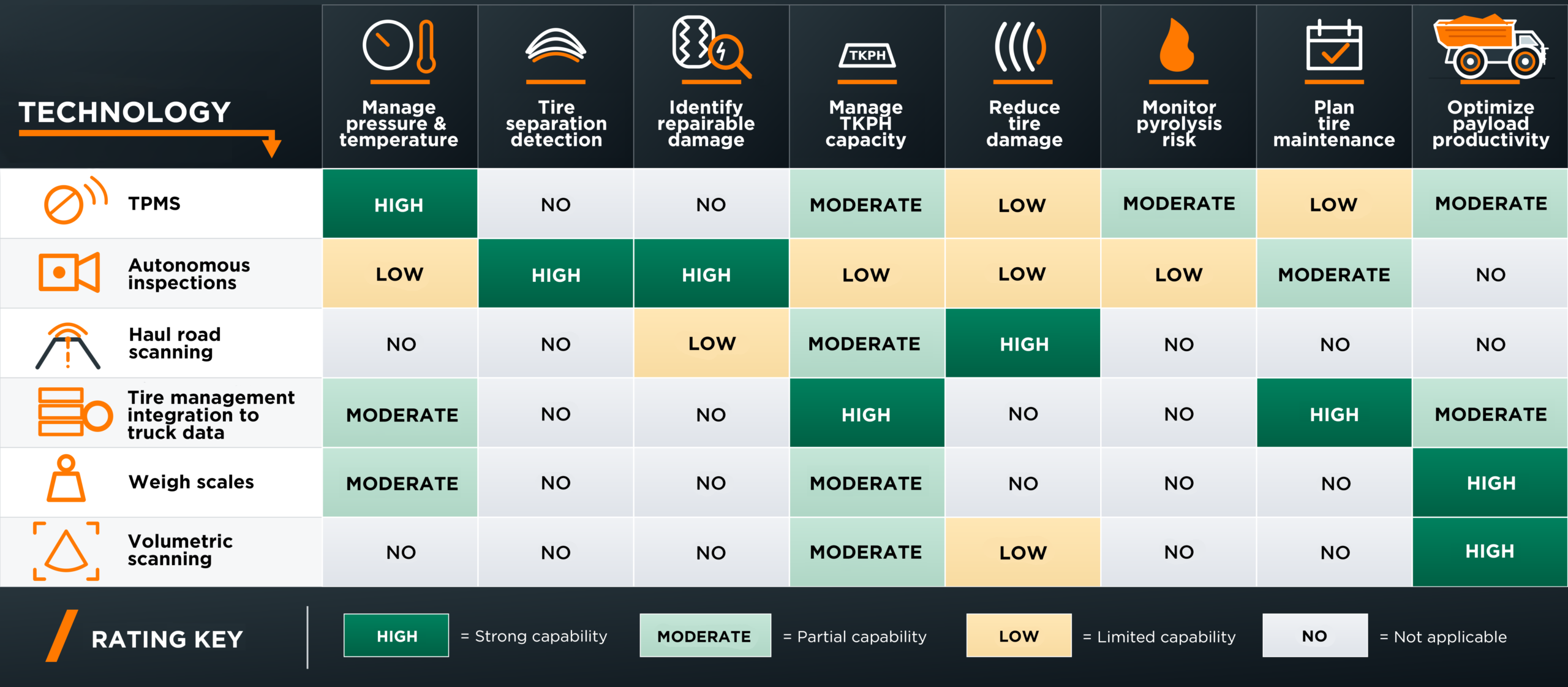
Figure 1: tire management objectives and technological capabilities. Source: Kal Tire.
Each of these technologies was developed to answer a specific operational question and has its own strengths and limitations. Understanding those nuances is essential when designing an integrated solution. Let’s look at some examples.
A TPMS provides continuous visibility of tire pressure and internal air cavity temperature. Underinflation, overinflation and gradual pressure loss can all be detected with TPMS before they develop into more serious issues. This helps maintenance teams intervene earlier and improves maintenance planning across the fleet.
Frame notes that teams on site sometimes expect technologies to solve problems they were not designed to address. A common example occurs after a tire fire takes place due to a closed tread separation. Sites operating TPMS technology may ask why no alarm was generated prior to the event. The answer is straightforward. The system monitors internal tire pressure and temperature, so it’s not because the technology failed but because it’s measuring a different parameter.
Thermal imaging systems, such as KalPRO™ TireSight, measure the external surface temperature of the tire as equipment passes a fixed inspection point. Abnormal heat patterns can indicate structural issues, including tread separations and localized hot spots. This helps maintenance teams identify risks that may not be visible through pressure monitoring alone, and the technology is particularly valuable for mines experiencing tire fire risks.
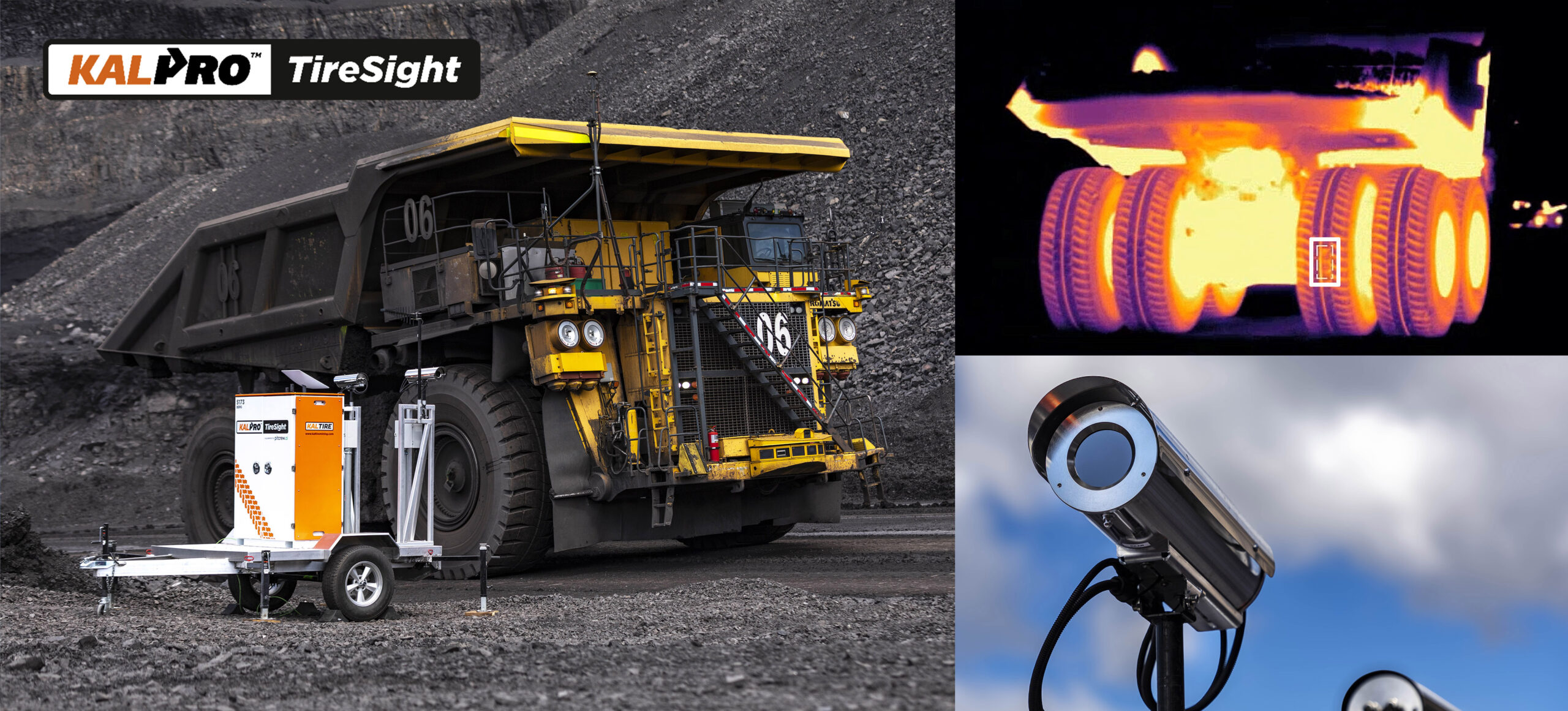
However, thermal imaging remains a single sensing technology. While it can identify heat signatures associated with damage, it cannot determine the full depth or extent of that damage within the tire structure. Nor can it identify where, or under what operating conditions, the damage originally occurred. Thermal data alone also provides limited insight into other important aspects of tire performance and operation, such as inflation pressure management, slow air-loss conditions, tire loading, or how the fleet is operating relative to the productivity and TKPH (tonne-kilometre-per-hour) capabilities of the tire. As a result, additional data sources and engineering analysis are often required to fully understand both the issue being observed and the operational factors contributing to it.
Designing an integrated solution
Different technologies answer different operational questions, and the limitations of one technology can often be addressed by another. However, when using multiple tools, there’s a risk of information overload. Turning data into insights that people can trust and act upon is key.
This is where an integrated management platform, such as TOMS (Tire & Operations Management System) from Kal Tire, plays an important role. Rather than leaving data dispersed across multiple systems, TOMS uses AI to combine datasets from different technologies and provide a common view of tire performance, operational conditions and maintenance activities. This allows priorities to be validated and the appropriate response identified.
Rigney explains: “Engineering an effective solution requires an understanding of the complete system. If we only optimize one component, then we’ll probably only improve one metric. But if we understand how the whole system works together, that’s where meaningful improvements can be created.”
For instance, one coal mine used TOMS to take control of tire planning across a 30-truck haulage fleet. By automating work identification and aligning tire jobs with scheduled maintenance, the team decreased the fleet’s tire related downtime by 38% and moved an additional 76,000 tonnes of coal with the extra availability among other benefits.
Technology is only as good as the people using it
Technology can detect data abnormalities, identify trends and generate alerts, but it cannot (yet) decide what action should be taken. That still depends on engineering judgment and operational experience. As AI and advanced analytics become more common, technology will increasingly help mines prioritize information and identify emerging risks. But experienced engineers and technicians remain central to interpreting and contextualizing the data, validating recommendations and deciding the most appropriate response.
Kal Tire has a team of Condition Monitoring Analysts – engineers who monitor scans from its KalPRO™ TireSight and KalPRO™ HaulSight solutions on a 24/7 basis – validating anomalies, prioritizing actions for site teams and alerting them to hazards where appropriate. The team has access to sensor data and can reference tire history, including where it was last mounted, past repairs, physical inspection findings and tread depth. That complete picture allows clients to make better choices on actions taken.
Experienced people also develop realistic timelines for each project and help ensure the mine sticks with its plan long enough to see the desired results. To truly solve a problem takes time, and without a clear timeline, measurable data points and good communication, a mine could make changes part way through a project or abandon a solid plan before it delivers its full value.
Ultimately, the greatest value comes when people, processes and technology work together to improve safety, productivity and tire performance.
Implementation, ownership and value realization
No technology program is resource-free. Technology is often sold as a simple implementation, but the reality is every implementation requires resources, work across mine departments and changes to site processes, and if not supported properly, the technology fails.
Many technology trials begin with a loose agreement that the concept is worthwhile, without clearly defining what success looks like by answering questions such as:
- What productivity gains are we expecting and what does that mean to our organization?
- What cost savings will it generate?
- What safety improvement or risk reduction can we expect?
Once these are known, the organization can view the required resourcing in the context of cost vs gain, and taking on those resource commitments and process adjustments becomes more palatable.
“I’ve seen many examples where implementations stall – in my experience, a successful implementation generally requires three things. First, a clear definition of the problem, what it’s costing the operation and how the technology will address it. Second, an honest road map that sets out the resources and responsibilities needed to implement and maintain the system, and to act on what it tells you. And third, an ongoing measure of the results.”
Kevin Frame, Regional Manager, Western Canada, Kal Tire’s Mining Tire Group
Measurement is what keeps a program on track. By agreeing on the KPIs that matter, tracking both leading and lagging indicators, and keeping the “do nothing” alternative in view, a mine can clearly show the return on its investment and the value of the resources behind it.
Better questions. Better outcomes.
This paper started by introducing a simple question: what problem are we trying to solve? It’s one that’s easy to overlook when new technologies are constantly entering the market and leaders are asking for fast performance improvements, but it’s also the question that determines whether an investment delivers lasting value.
The most effective tire management strategies begin with a clear understanding of the operational challenge, followed by the right combination of technology, engineering controls and expertise to address it. No single system can solve every problem; the greatest value comes from applying the right tools, supported by engineering knowledge, operational experience and disciplined implementation.
The operations that achieve the best outcomes have always been, and will continue to be, the ones that take the time to ask questions, understand their challenges more deeply before deciding how to solve them. For mines reviewing their tire management approach, the starting point is the same: define the problem, agree on what success looks like, and then bring together the technology, people and processes needed to deliver it.
More Information
Contact us for more information about any of the topics in this whitepaper.